
SPbPU Hosts Discussion on the Development, Production, and Operation of NPP Pump Equipment, as well as the Current State and Prospects of the Domestic Hydraulic Machinery Industry

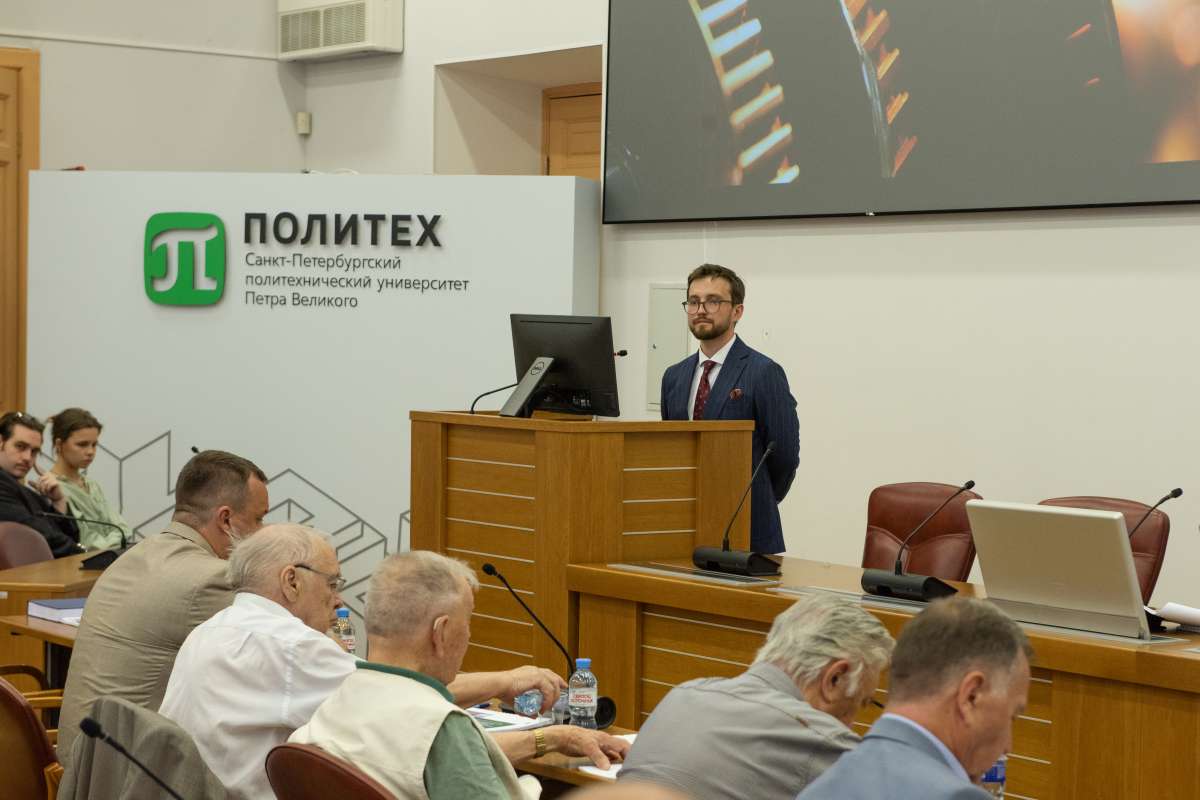
The XIV All-Russian Scientific and Technical Conference «Hydraulic Machines, Hydraulic Drives, and Hydropneumatic Automation: Current State and Development Prospects» was held at the Research Building «Technopolis Polytechnic» of Peter the Great St. Petersburg Polytechnic University (SPbPU). The event was organized by the Hydraulic Machinery Laboratory of the Graduate School of Power Engineering, Institute of Energy, SPbPU. This year, the conference was included in the Action Plan (Roadmap) for personnel, technological, and scientific cooperation between SPbPU and JSC «Concern Rosenergoatom» for 2025−2028, serving as a platform for discussing pressing issues in the development of domestic hydraulic machinery and the operation of NPP pump equipment.
The conference, which the SPbPU Hydraulic Machinery Laboratory organizes every two years, has become one of the key industry events, bringing together representatives from universities, research organizations, machine-building enterprises, and developers of engineering software. Its primary goal is to foster cooperation between science and industry, facilitate the exchange of advanced engineering solutions, and initiate new scientific and technical projects aimed at improving the efficiency of domestic power engineering.
The central event of the first day was the plenary session, dedicated to the development, production, and operation of pump equipment at NPPs. The session was opened by Alena Aleshina, Director of the Higher School of Power Engineering at SPbPU and Chair of the Conference Organizing Committee. Moderating the discussion, she emphasized the special role of university–industry collaboration in training engineering personnel and creating modern technologies for the energy sector.
The Chair of the Conference Scientific Committee, Professor Alexander Zharkovsky of the GHigher School of Power Engineering, presented a report on the work of the Hydraulic Machinery Laboratory, in which he outlined the ongoing research program and the results of joint projects with leading industry enterprises. Today, the Laboratory is one of the largest university-based competence centers in the field of hydraulic machinery, conducting research in the development, design, and operation of pumps, hydraulic turbines, hydrodynamic transmissions, and other types of hydraulic machines.
The presentations by representatives from leading power engineering enterprises drew considerable interest from participants. Igor Tverdokhleb, President of the Russian Association of Pump Manufacturers and First Deputy Chief Executive Officer — Director for R&D at LLC "MC "GMS Group," presented an overview of the current state of the pump equipment market for nuclear power plants, outlining key development trends. Pavel Pavlov, Head of the Laboratory at JSC "NPO CKTI," spoke about the most common operational issues with NPP pump equipment and modern approaches to addressing them. Sergey Pylaev, General Director of JSC "NPC Industrial Technologies," dedicated his report to the introduction of innovative materials into friction units of rotary equipment. Sergey Fedorov, Chief Designer of Hydraulic Turbines at JSC "Power Machines," presented the company's experience in developing and manufacturing pump equipment for nuclear and thermal power plants. The plenary session concluded with a discussion in which experts examined the prospects for import independence, digitalization of design processes, and increasing the reliability of equipment for nuclear power facilities.
The conference continued with two thematic sections, featuring over thirty scientific presentations devoted to blade-type hydraulic machines, positive-displacement hydraulic machines, hydraulic drives, and hydropneumatic automation. The participants focused on numerical modeling of physical processes in hydraulic machines, optimization of pump and hydraulic turbine designs, experimental research, digital design technologies, and the application of artificial intelligence in engineering practice.
A significant portion of the program consisted of research conducted by specialists from the SPbPU Hydraulic Machinery Laboratory. Laboratory Engineer Alexey Zhuravkov presented the results of research on low-specific-speed pumps and also discussed the development of new approaches to flow-path design and fluid flow calculation in hydraulic torque converters. Associate Professor Dmitry Svoboda of the Higher School of Power Engineering presented the results of flow-path optimization for a hydraulic axial turbine of a high-speed turbodrill. Senior Lecturer Arseny Klyuev presented experimental results of an optimized flow path for a free-vortex pump developed under one of the Priority 2030 program projects. Associate Professor Vasily Shchur reported on the progress of the first stage of a project to modernize the hydraulic turbine of the Luzhskaya HPP-2, carried out with the participation of students from the SPbPU Student Design Bureau "System Engineering," as well as on the development of a pumping unit for a domestic high-performance fire-extinguishing system for fuel and energy sector facilities. These studies demonstrate the broad range of the Laboratory's scientific competencies — from fundamental research on fluid flows to solving practical problems in domestic power engineering.
The reports devoted to modern digital technologies drew particular interest. Yaroslav Chernyshev, a representative of TESIS Company, demonstrated the capabilities of the domestic software package FlowVision for numerical simulation of hydraulic machines. Anna Gukasyan, Lead Design Engineer at JSC "Power Machines," presented the results of an analysis of the circulating pump's performance in the NPP condenser system. The application of modern CFD modeling methods and flow-path optimization became one of the conference's key themes, confirming the growing role of domestic software solutions in engineering practice.
Following the scientific program, participants were offered a tour of the SPbPU Hydraulic Machinery Laboratory, where they were introduced to modern research equipment, experimental test rigs, and the team's promising developments.
The holding of the XIV All-Russian Scientific and Technical Conference once again confirmed the high standing of the SPbPU Hydraulic Machinery Laboratory as one of the leading research centers in the industry. The regular convening of the conference helps to strengthen cooperation between the university, industrial enterprises, and the scientific community, creates conditions for the development of new technologies, the training of highly qualified engineers, and the implementation of joint projects in the interests of domestic energy and mechanical engineering.
.jpg)