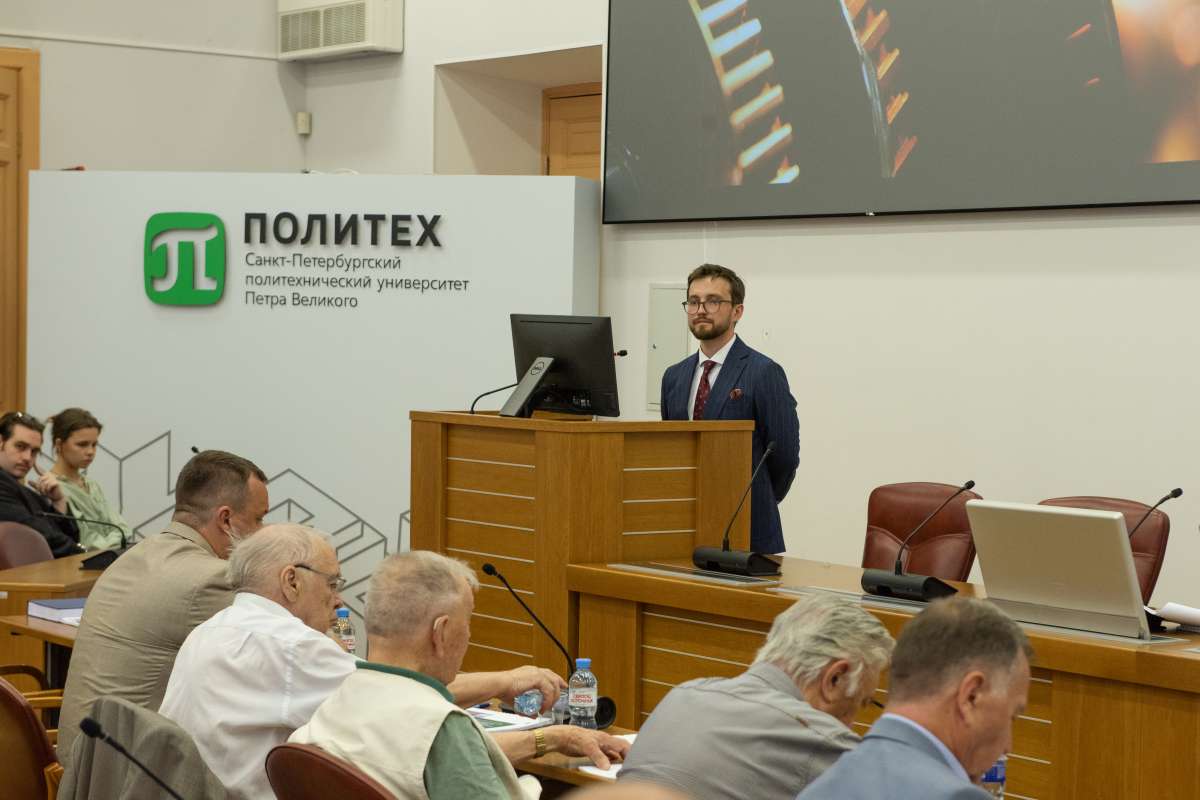

Controlled Turbulence: A New Plasmatron Regulator for Improving Protective Coating Efficiency
.jpg "Controlled Turbulence: A New Plasmatron Regulator for Improving Protective Coating Efficiency")
In power engineering, aircraft manufacturing, and related industries, plasma spraying is a key method for creating protective and functional coatings for parts operating in extreme conditions — turbine blades, combustion chamber components, and high-temperature equipment. The efficiency of this process directly depends on the characteristics of the plasma jet, yet until recently, controlling its turbulence remained a challenging task.
Scientists at the Institute of Energy of Peter the Great St. Petersburg Polytechnic University have proposed a solution that transforms turbulence from a side effect into a controllable technological tool.
The developed device is a regulator for the degree of plasma flow turbulization, which connects to an existing arc plasmatron with inter-electrode inserts (IEIs). In such systems, the main arc burns between the cathode and a grounded nozzle-anode, providing high power (20–40 kW) at a relatively low current (100–300 A), which significantly reduces electrode erosion compared to plasmatrons with a self-stabilizing arc.
The essence of the innovation lies in creating an additional current loop. The regulator includes a ballast resistor and an electronic switch (IGBT transistor) connected to the input section of the plasmatron. A microcontroller-based control unit sends pulses to the switch. When the switch is closed, a second, short arc is struck inside the channel between the cathode and the input section. This arc becomes a source of controlled instabilities, which are transferred into the plasma jet, enhancing its turbulence.
From a physical standpoint, the turbulization of the flow disrupts the boundary layer at the surface of the powder particles, significantly improving heat transfer from the plasma to the material. This ensures faster and more uniform particle heating, melting, and formation.
Importantly, the device integrates into existing systems without replacing the plasmatron or nozzle. The operator can flexibly select turbulization modes for different materials and product geometries by adjusting the pulse parameters on the control unit, making the technology versatile and easily adaptable to specific production tasks.
The development is protected by a utility model patent (RU 2025137447), registered on April 30, 2026. The authors are researchers from the Graduate School of Energy Systems at SPbPU — V.Ya. Frolov, D.S. Kriskovets, D.V. Ivanov, and B.A. Yushin. The patent holder is the university. The development builds on SPbPU's long-standing scientific expertise in plasma physics and coating application technologies.