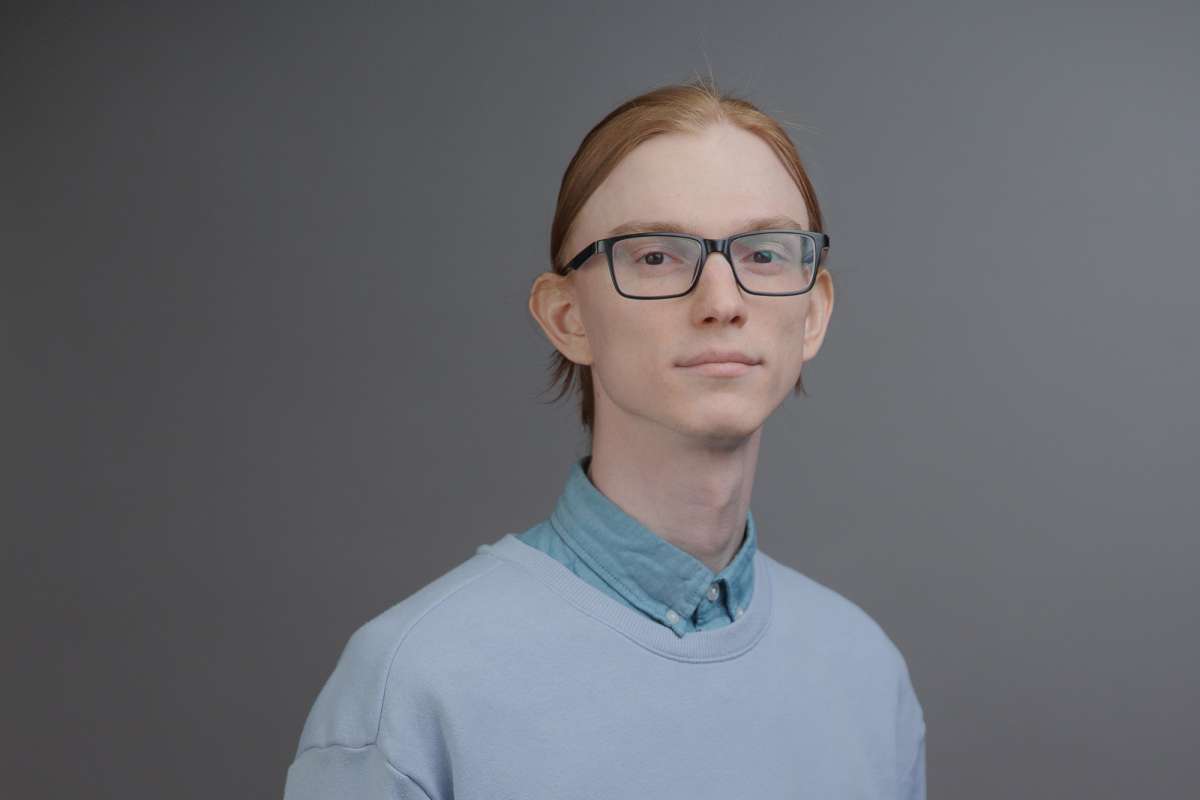

Evgeny Safonov: «Energy engineering is My Life»

Evgeny Safonov is a Senior Lecturer at the Higher School of Electric Power Systems, Institute of Energy, Peter the Great St. Petersburg Polytechnic University. On June 25, he defended his PhD dissertation. We spoke about his journey from schoolboy to PhD candidate, why lectures need to be rewritten every year, and what energy really means.
What brought you to energy sector?
I actually wanted to become a historian. I have a great love for Russian history. But my mother wouldn't allow it. She said I had to continue the family professional dynasty. She is a nuclear and thermal power engineer, and my father is an electrical power engineer. It seemed logical to me — even convenient, I'd say — to simply follow in my parents' footsteps and count on their professional support.
You are a Polytech graduate. What kind of student were you?
I think it's better to start from school. I remember a turning point in the seventh grade, when I finished the year with nine satisfactory grades. But then, little by little, by the end of school, I had worked my way up to a solid good student. At university, I followed the same path: satisfactory grades for the first two years, never qualifying for a scholarship. In those early years, I still thought: I'll graduate and go back to Krasnoyarsk. Everything changed in the third year, when it was time to choose our specializations. My top two choices for specialization were "Relay Protection" and "Power Stations," on my father's advice. For the third priority, I didn't know what to choose, so — being a sensible person — I picked up various brochures and read about what different departments did, and put "Electrical Apparatus" as my third choice. There was huge demand for my first two priorities, so I ended up in the third specialization because, with my not-so-great grades, I only made it there through the competitive selection. There I met my first research supervisor, Alexander Vasilyevich Grigoriev. He ignited my scientific interest and inspired me to pursue this work. Then, in my third and fourth years, I became a solid good grader, and in my Master's program I graduated with honors.
Do you have any vivid memories from your studies?
A vivid memory of studying? That's a good question. I remember those eternal waits outside classrooms, and someone from the group would come out and we'd ask, "What's in there?" That excitement. I remember it well. I was starting to forget it, but during my PhD defense, I remembered it again.
Vladimir Yakovlevich, my research supervisor, who unfortunately did not live to see my defense, used to say: "You are the one who continues my work." He defended his PhD as an apparatus specialist, but later moved into another field — plasma and electrical installations. And he looked at me as the person who would carry on the work he had once put on the shelf. That inspired me. I felt like I was continuing that scientist's legacy.
When did you realize you wanted to stay at Polytech as a lecturer?
It was more out of interest. I felt a desire to work with people. Dmitry Vladimirovich Ivanov offered me a teaching position.
Vladimir Yakovlevich, my research supervisor, who unfortunately did not live to see my defense, used to say: "You are the one who continues my work." He defended his PhD as an apparatus specialist, but later moved into another field — plasma and electrical installations. And he looked at me as the person who would carry on the work he had once put on the shelf. That inspired me. I felt like I was continuing that scientist's legacy.
Also, I simply find it interesting to work with students. My colleague at NIIPT (Research Institute of Power Engineering), Natalya Georgievna Lozinova, told me that teaching is a very good way to consolidate knowledge. As an engineer, you usually deal with one thing, then another, working selectively on various tasks. But when you teach, you build a structure of all that knowledge. It becomes easier for you to navigate your own field. I understood that I needed this, and everyone told me: "It certainly won't make you worse, only better."
What kind of lecturer are you?
I've heard from students in informal conversations that I'm a easy-going teacher, and that suits me, generally. But from my own impression, compared to my colleagues, I'm probably a bit stricter. My task is to teach. And the students understand that they won't leave without passing the exam. I have to give them a good run so that they leave me with at least some knowledge. They definitely shouldn't count on getting an easy pass from me.
What subjects do you teach?
I started with laboratory practicums in Electrical Engineering. Then I got a specialized subject from Vladimir Yakovlevich. I began teaching practicums on Semiconductor Electrical Apparatus. And I'll be giving lectures on it starting next semester. More recently, I started teaching Computer Science to first-year students. What else? Digital control systems for Master's students. And sometimes, from one course to another, depending on circumstances, I might be assigned one group in Electronics — also laboratory practicums — and the Physical and Technical Foundations of Modern Energy.
Do you spend a lot of time preparing for classes?
A lot, actually. This is my third year teaching Digital Control Systems. And every time, after six months, I open my notes and think: "My God, I need to redo everything." I completely remake this course from scratch every semester. Maybe it's just that I get bored. You've already mastered something, it seems simple to you, and you think: "Why would I teach something as simple to Master's students? I should probably teach them something more challenging." So I start gathering new materials to make the course more challenging. Vladimir Yakovlevich Frolov used to say that it takes 5 to 10 years for a course to fully settle. So yes, these subjects require a lot of preparation. But basic subjects like Electrical Engineering and Computer Science are more like a break for me, because they're relatively simple. I already have experience there. Everywhere you work with software — in absolutely every field, you can't do without it now. So even while working on my dissertation materials, I had to do a lot of programming. And now I have a thorough understanding of algorithms and exactly what first-year students need. So that comes easily too.
What is your dissertation about?
It deals with short-circuit current limiting. In principle, a short circuit is any problem in an electrical installation of any capacity. We examined complexes with the most severe cases. In autonomous electrical complexes, there is a fairly dense layout of consumers and generation points. High-capacity storage devices, such as battery banks, are also used to maintain autonomy. And there, when a short circuit occurs, very large short-circuit currents arise because the network is short and the reactance is low. My task in this situation was to develop a device capable of limiting such short-circuit currents.

Energy. Energy is my life. I've dreamed my whole life of becoming a specialist. And that dream has come true. As cliché as it sounds, it has simply become a part of me, a part of my life. The best words don't do it justice. Everything I do now revolves around it.
How many years did the dissertation take?
If you look at it honestly, it took as much time as it needed. From the moment I enrolled, it took 7 years in total.
Were there any difficulties during the dissertation work?
This is my third dissertation topic. I changed it several times. First, the topic was "Hybrid Generator Circuit Breakers." Vladimir Yakovlevich and I tinkered with it a bit and realized there was nothing for us to do there. That was actually his PhD topic. He wanted me to come up with something new. But I didn't come up with anything, unfortunately. The second topic was a positive-temperature-coefficient current-limiting device, also for generator networks. But there we lacked the material resources. We wanted to use a material specific to electrical engineering — vanadium-3 oxide — for energy applications. But the manufacturing technology is complex. We didn't have the equipment to make a full-fledged product for testing. So that topic was also shelved. But now I'm gradually digging it out again. I want to do a bit more work in that area. And then, in the third year of my postgraduate studies, the third goal was formulated, and that's what I defended. Five full years were just enough for me to write, publish articles, conduct experiments, and resolve some bureaucratic issues.
When you face a situation where you can't see a way to continue a topic, it's always hard to start from scratch. To come up with something new, formulate goals and objectives, and roughly plan everything that needs to be done. But that's probably just the routine of solving scientific problems.
The death of my research supervisor on the eve of the defense — everything else, compared to that, seems like ordinary routine.
How did the defense go? Were there any interesting or unexpected questions?
The defense went very well. I was very nervous. With all that anxiety, I was expecting an apocalypse. But everything happened in a very good, almost family-like, friendly atmosphere. There were good questions. I would even have preferred to be grilled a bit more, so that I could feel: "Yes, now I'm a specialist." As soon as I took the pointer and started my presentation, the pointer fell out of my hand. I bent down and nearly lost my balance, kneeling. On the defense recording, you can see that I almost fell. There's something to laugh about, something to remember. Otherwise, everything went as it should.
Were there any questions you didn't expect, that pointed you in a new direction?
We received reviews of the abstract from design bureaus, and they were right to the point. I was surprised at how well they understood the work. There were questions related to systems, to operating modes — where it would be better to model a short circuit, what modifications could be considered for my device. They really made me think. The questions during the defense were mostly about understanding. And when all the members of the council had finally figured out what it was and what I was defending, they said: "Yes. We have no more questions. You have earned your degree."
What a wonderful ending. Are you resting now, or do you have other plans?
No, there's no rest yet. There's still a lot of paperwork to do after the defense. I prepared the transcript of the defense and submitted the documents to the library. And actually, it seems like there's just a little bit left — just a little polishing of the papers — and then I can just work calmly.
Do you have any projects continuing over the summer, or are you finally taking a break?
I try to take a vacation in August. A less busy June and a free July are spent preparing materials for the next semester. There are grants at the university that I'm working on. I also work part-time at Rosseti, with former NIIPT colleagues, on major direct-current construction projects — a fairly unique project for Russia, so I really value that job because touching something unique in Russia, I believe, is important for personal growth. Right now, perhaps the most enjoyable moments are when you can just work, just for yourself. There's no one around, you're free to do what you want, read all sorts of books.
What does scientific work consist of?
Probably it's better to recall what was done most recently. Grant applications were submitted. I was asked to put together several theoretical papers, emphasize the relevance of the problem, and describe how we can solve it. Of course, there's the understanding that the grant might not be won. But in any case, we're working on relevant topics, and the work must continue. Maybe this grant won't be won, but maybe the next one will, when we have even more materials, more articles, more experimental data to confirm the viability of the concept. Science is literally everything. You read articles, you write articles yourself, you communicate with the same neural network, you discuss a problem, you try to understand something.
The scientific process, for me personally, has become continuous. Whatever I do, it's all aimed at either creating something or understanding something.
What is energy engineering to you?
Energy. Energy is my life. I've dreamed my whole life of becoming a specialist. And that dream has come true. As cliché as it sounds, it has simply become a part of me, a part of my life. The best words don't do it justice. Everything I do now revolves around it.
Does life consist of work only?
Yes, I think life is work. At least, for me, life really is work. It's my dreams, it's my prospects, it's even my hobby. So yes, that's how it's turned out. It sounds a bit sad, perhaps, but I have no regrets.
We congratulate Evgeny on successfully defending his PhD dissertation and wish him continued scientific achievements! His journey from student to PhD candidate is a vivid example of how genuine interest in one's work and the support of mentors can shape a professional destiny. The Institute of Energy is proud that among its faculty there are such creative, dedicated specialists who are ready not only to conduct research and work on real industrial projects but also to rethink their courses year after year for the sake of their students. Best of luck with new grants, projects, and, of course, a well-deserved vacation!
.jpg)