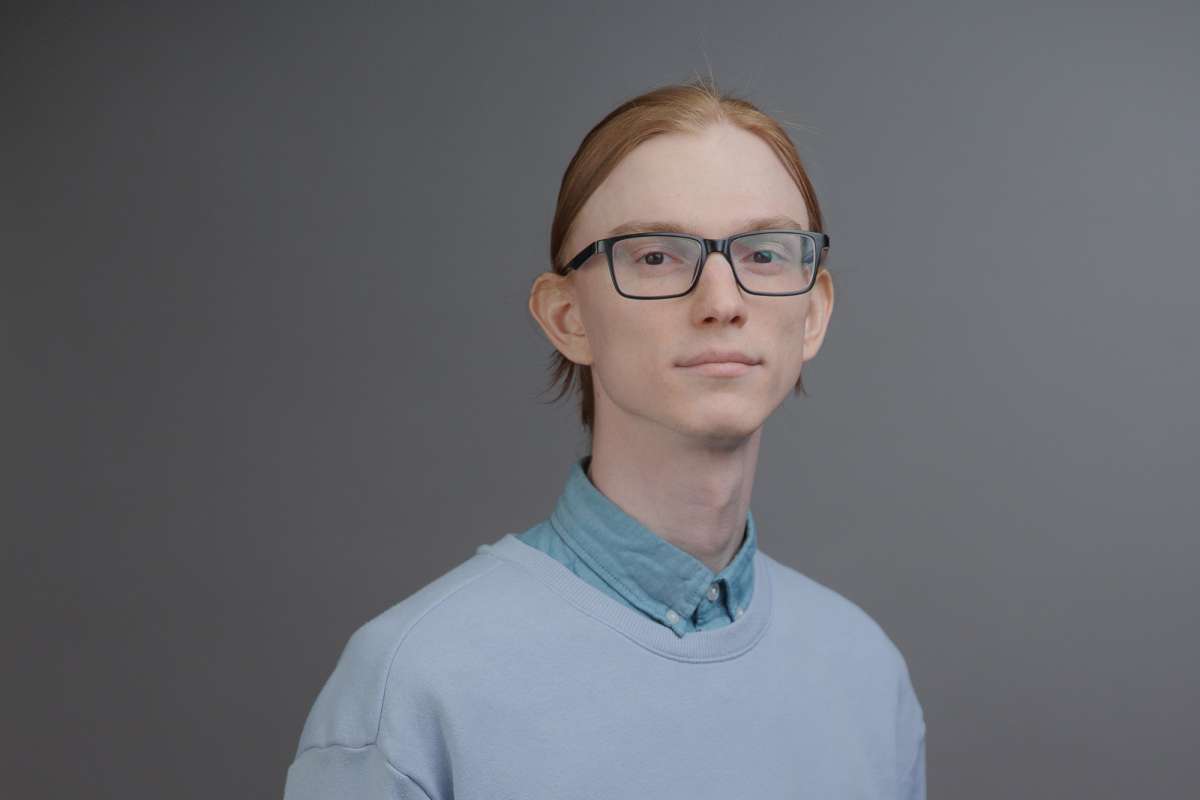
Tempus Aspirandi: Alexander Mukhachyov: «Intelligence matters, but without wourage, research never begins»
.jpg "Tempus Aspirandi: Alexander Mukhachyov: «Intelligence matters, but without wourage, research never begins»")
Alexander Mukhachyov, the hero of the new episode of «Tempus Aspirandi,» reflects on why courage is essential in energy engineering, how winning a competition transforms a «student» into a «researcher,» and why a modern postgraduate student should read Feynman. Spoiler: to understand that science is not just formulas and ironclad logic, but also the ability to weather failures with a sense of humor on the road to high efficiency.
Recall the moment when you realized you wanted to devote yourself to energy engineering and enroll in a postgraduate program.
I only started thinking about postgraduate studies during my Master's degree, when I changed my field of study and once again felt the desire to learn, grow, and create something new. Postgraduate studies are a great opportunity for that, and I believe such chances should never be missed.
They say postgraduate studies are a test of endurance. What serves as your inner fuel, keeping you from abandoning research halfway?
From a physical standpoint, inner fuel is food, and I buy food partly with my stipend — that definitely keeps me from quitting halfway. But seriously, I haven't had any major research yet — I'm only in my first year of postgraduate studies, at the very beginning of my journey.
What stereotype about postgraduate students are you ready to challenge with your own example?
The stereotype that postgraduates are eternal bookworms who never tear themselves away from their tomes. In reality, postgraduate students are usually the most active folks — people who have decided to move forward, not stand still, and push their own ideas ahead.
How could your research change the energy industry?
My research will help optimize the design of turbogenerators, improve their efficiency, and enhance the accuracy of their diagnostics. So, you could say my work will increase the efficiency of using nuclear power and fossil resources.
What was the most unexpected challenge you encountered while working on your dissertation?
Every result of my simulations seems very strange at first glance. And the saying "the first pancake is always lumpy" wasn't coined for nothing. You just need to be able to analyze the result and figure out what's wrong... The main thing is not to be afraid of making mistakes — fear should never get in the way of the work.
-3.jpg)
The main thing is not to be afraid of making mistakes — fear should never get in the way of the work.
If you had access to any laboratory in the world or a supercomputer, what experiment would you run tomorrow?
You have no idea how much I want to verify every single one of my calculations! Every electromagnetic or thermal calculation of some piece of equipment — I want to confirm it. So I've calculated it, but how do I trust it? If I had my own turbogenerator with the ability to measure absolutely everything, I'd be overjoyed.
Have you ever had to build an experimental setup out of "whatever was at hand"?
I haven't had to build an experimental setup at all yet. But in calculations, what I usually lack is the courage and persistence to figure things out.
What scientific and innovation competitions have you participated in or are you planning to participate in?
Recently, I presented at an innovation session organized by the InterElectroMash association as part of the Electro-2026 exhibition in Moscow. It wasn't a competition, but my participation made me believe in myself and not be afraid to present the results of my work. Even if they don't appreciate it, nothing bad happens — they'll give their feedback on where to go next. And at that session, everything went very well — I truly felt valuable, and it gave me the motivation to do even more work.
Which of your victories over the past year has brought you the most pride?
Winning the "Energy of Development" competition organized by RusHydro. I really like my Master's thesis — many nights were spent working on it. And thanks to it, I made it to the finals of the competition and even won. I was incredibly impressed by the quality of the competition's organization, the preparation of the other participants, and the excursion program. I'm not just proud of my work — I'm very proud of my performance there and grateful to fate for good teammates.
What hobby helps you "reboot your brain"?
I don't have a particular hobby. Sometimes I play intellectual games, like "What? Where? When?" at the Polytechnic's intellectual club. Lately, I really enjoy playing computer games.
Do you have any role models or inspirations in science, and who are they?
My favorite book is "Surely You're Joking, Mr. Feynman!" by the Nobel laureate in physics Richard Feynman. He described his life and work very interestingly and humorously, including his involvement in the Manhattan Project. I read it back in school, was incredibly inspired by him, and I'm still very much looking forward to seeing our own history of atomic research become more widely popularized.
What skills and qualities, in your opinion, are essential for a modern energy scientist?
Definitely courage and perseverance — absolutely indispensable. Without them, you simply won't even start the work. Intelligence comes into play later. An anxious researcher who is afraid of making mistakes will never make discoveries, no matter how smart they are.
Your advice to future postgraduate students at the Institute of Energy
Don't be afraid of anything — you only live once! Seize every opportunity life gives you. If someone doesn't like something about you — let them not like it. The main thing is not to take it to heart and to keep moving forward.
Thank you for sharing not only your dissertation plans but also your doubts, victories, and outlook on life! We wish Alexander Mukhachyov a successful dissertation defense and an inexhaustible supply of inner fuel — especially when the calculations spit out yet another "strange" number.