
Tempus Aspirandi: The Researcher’s Path — Evgeny Chesnokov
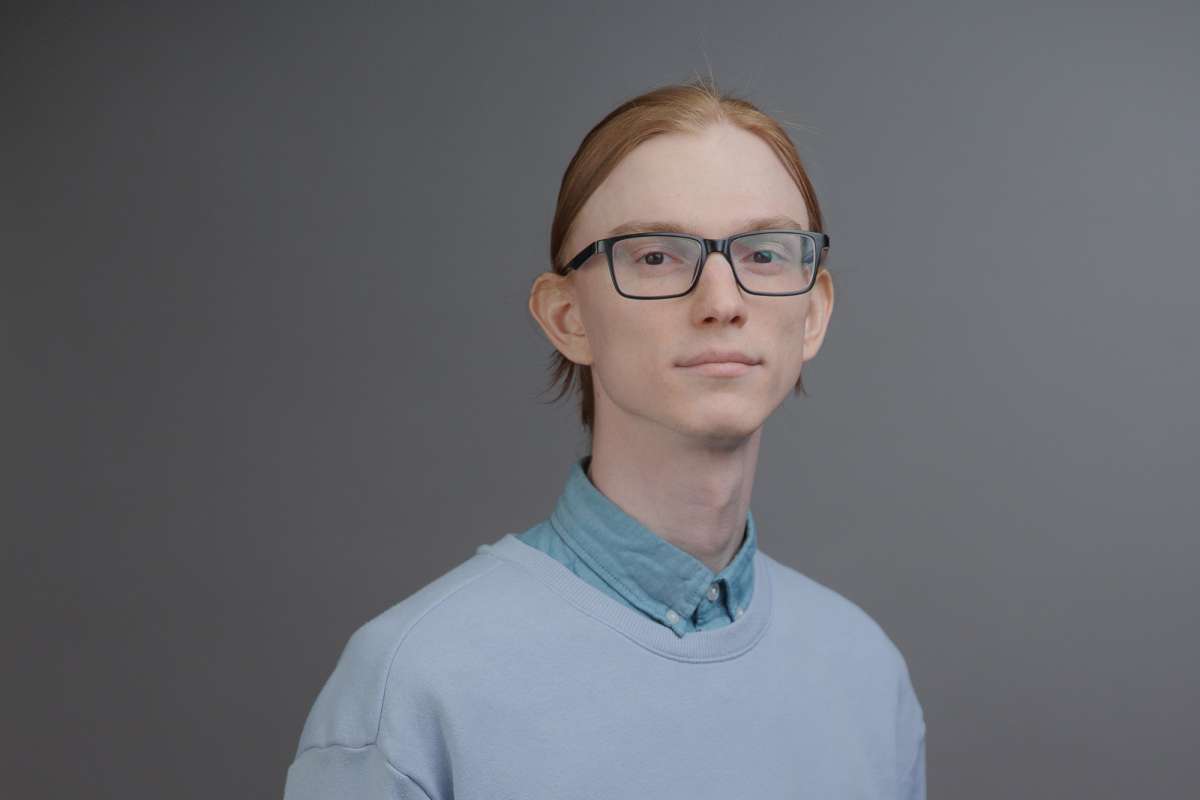
Today, on PhD Student's Day, January 21, 2026, we are reviving our «Tempus Aspirandi» column. Our focus is on young scientists whose work at the intersection of science and engineering is shaping the future of the industry.
What motivates a young researcher to choose cables and cable accessories as their specialization? What does working on a dissertation look like when its results could be applied in fusion installations or spacecraft? And what challenges does the modern energy sector face in the era of digitalization? Evgeny Chesnokov, a postgraduate student at the High School of High-Voltage Energy specializing in 2.4.1 Theoretical and Applied Electrical Engineering, spoke about his scientific trajectory, work-life balance, and shared advice for those still contemplating a career in science.
Evgeny, why did you choose the field of energy and the Institute of Energy for your postgraduate studies?
This scientific field aligns with my research interests, and it is where I can develop as both a specialist and a scientist.
What attracts you most about your research area?
I am most attracted by interesting and complex engineering and scientific problems. Solving such problems requires a lot of time and effort. But the final positive result, when the chosen method or approach works and is confirmed, gives a tremendous amount of energy.
What were your initial expectations of postgraduate studies, and how did they align with reality?
When I entered postgraduate studies, I expected to constantly develop, learn new things, participate in projects, and write articles. This has fully aligned with reality.
What goals have you set for yourself during your postgraduate studies?
My primary goal is to grow as a scientist, to gain sufficient experience and knowledge to earn a Candidate of Sciences degree, and, naturally, working towards this goal involves writing the dissertation itself.
Tell us about your dissertation topic.
My dissertation is dedicated to the analysis of the electro-thermal operating modes of high-current, low-inductance cable lines. Analyzing operating modes and developing new designs for such cables is currently relevant due to active developments in the fields of fusion energy and space technology. The results of my work will be applied in these areas. I also find the topic interesting because it combines several disciplines: electrical materials science, theoretical foundations of electrical engineering, electrophysics, heat engineering, and mechanics.
What difficulties do you encounter in your research?
Conducting physical experiments to confirm theoretical calculations presents challenges in the work.
What results have you obtained so far?
At this stage, numerical models have been developed that allow for calculations for various geometric dimensions of structures, material properties, and operating modes.
What practical applications could your research have?
The results of the work can be used, in particular, as a tool for selecting cable designs when cables operate in new, previously unused modes. Also, design engineers can develop new constructions using the numerical models I mentioned earlier.
What conferences and scientific events have you participated in?
I regularly participate in international and all-Russian scientific conferences in English and Russian. It's always interesting to hear the opinions of more experienced colleagues on my work from an external perspective, as well as to learn what other research groups in my field are working on.
How do you interact with your scientific supervisor?
I am in constant contact with my scientific supervisor (Georgy Greshnyakov, Professor at the Higher School of High-Voltage Engineering of the Institute of Energy, Doctor of Technical Sciences). We often discuss aspects of my work and other scientific questions. Thanks to these constant conversations, I feel I am continually growing beyond myself.
How do you see your research topic developing in the future?
At the moment, I see my work as a completed topic, so I haven't yet thought about its further development.
Which subjects and courses within the postgraduate program have been most useful for you?
Honestly, everything seems useful. Specialized disciplines allow me to develop in my field as a scientist, while humanities courses contribute to my personal development.
What resources do you use for your research (libraries, laboratories, software)?
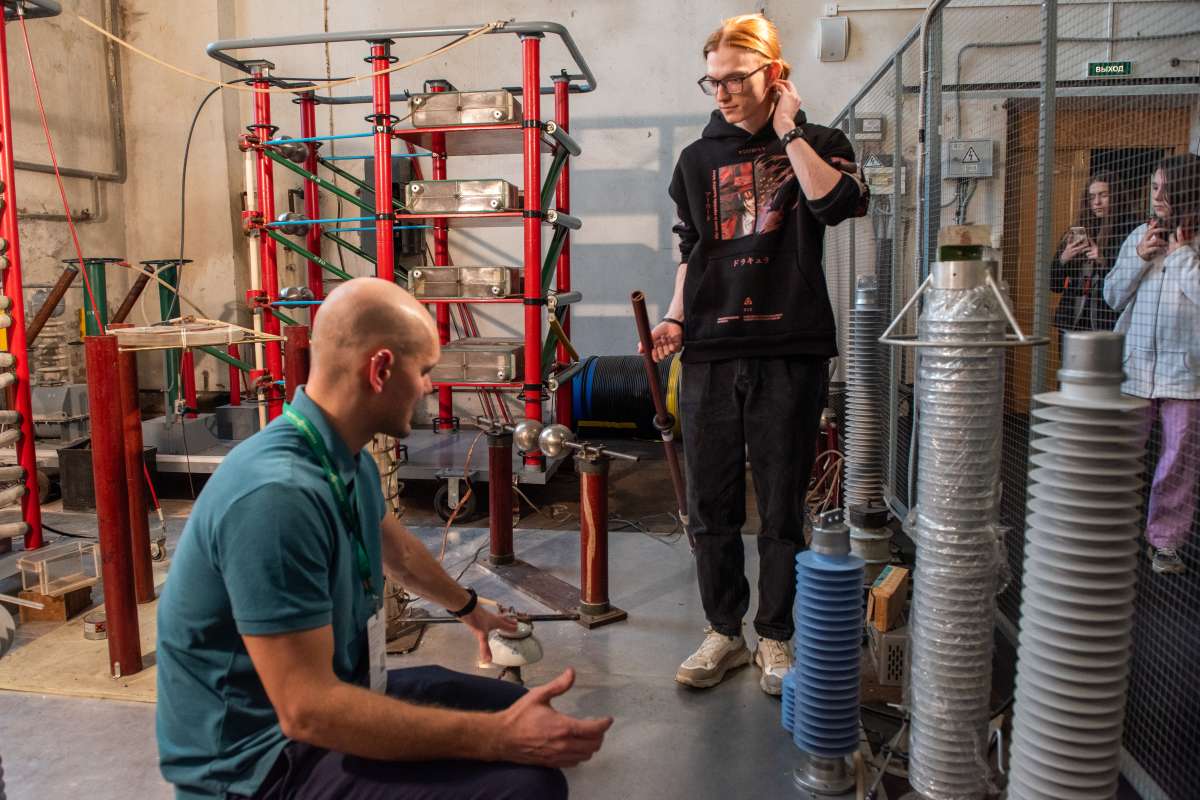
For my research, I use electronic resources such as Elibrary, IEEE Xplore, Google Scholar, and others. I conduct my work in the laboratory at the "Engineering Center for Advanced Insulation Systems" based at the Polytechnic University. I primarily use COMSOL Multiphysics as my main software.
How do you find balance between your academic, research, and personal life?
The balance established itself naturally, to be honest. I manage to work, study, and relax. I think it's largely thanks to the fact that I work at the University.
What skills have you developed during your postgraduate studies?
Skills in quickly finding and analyzing information, solving engineering and scientific problems, and communicating with people, which is also very important.
Do you plan to continue your career in science or in industry?
After completing my postgraduate studies, I plan to continue working in science and very much hope to write a doctoral dissertation.
What challenges and prospects does modern energy face?
Modern energy faces constant innovation, and in my opinion, it is not always ready for them.
How do you see the future of energy in 10-20 years?
In 10-20 years, the energy sector will continue to develop constantly and dynamically. This is because people are constantly discovering new areas and tasks, the solution of which directly depends on energy resources. Artificial intelligence will be applied more frequently, and the level of digitalization will increase.
What advice would you give to future postgraduate students at the Institute of Energy?
I would advise future postgraduate students not to postpone writing their dissertation and not to lose their thirst for learning everything new.
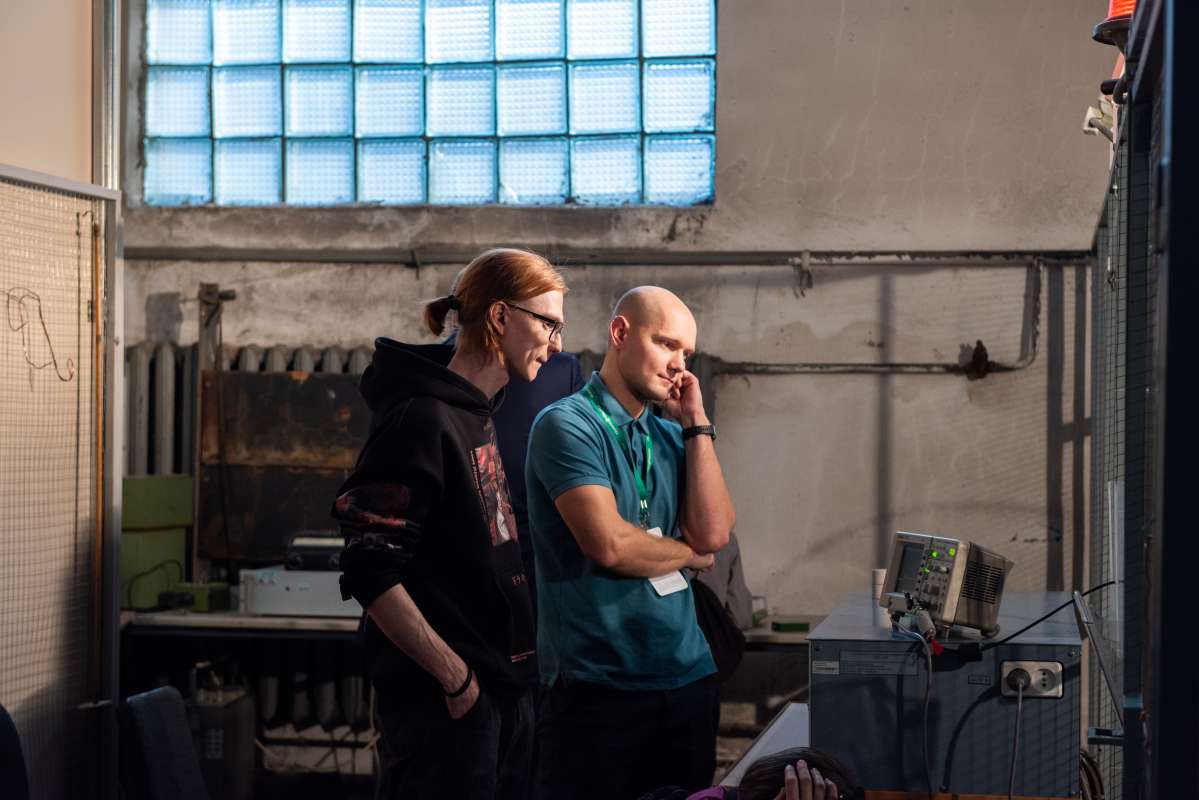
Evgeny's experience shows that postgraduate studies are a crucial time for a scientist's formation. This is where one learns to solve real-world problems facing the energy sector, where it's essential to have a deep theoretical understanding and the ability to test one's ideas in practice. His advice to future postgraduate students – "not to lose interest in new knowledge" – reflects the main idea of our column. In "Tempus Aspirandi," we will continue to tell stories about people who, through their research and hard work, are creating the energy of the future.
-2.jpg)
