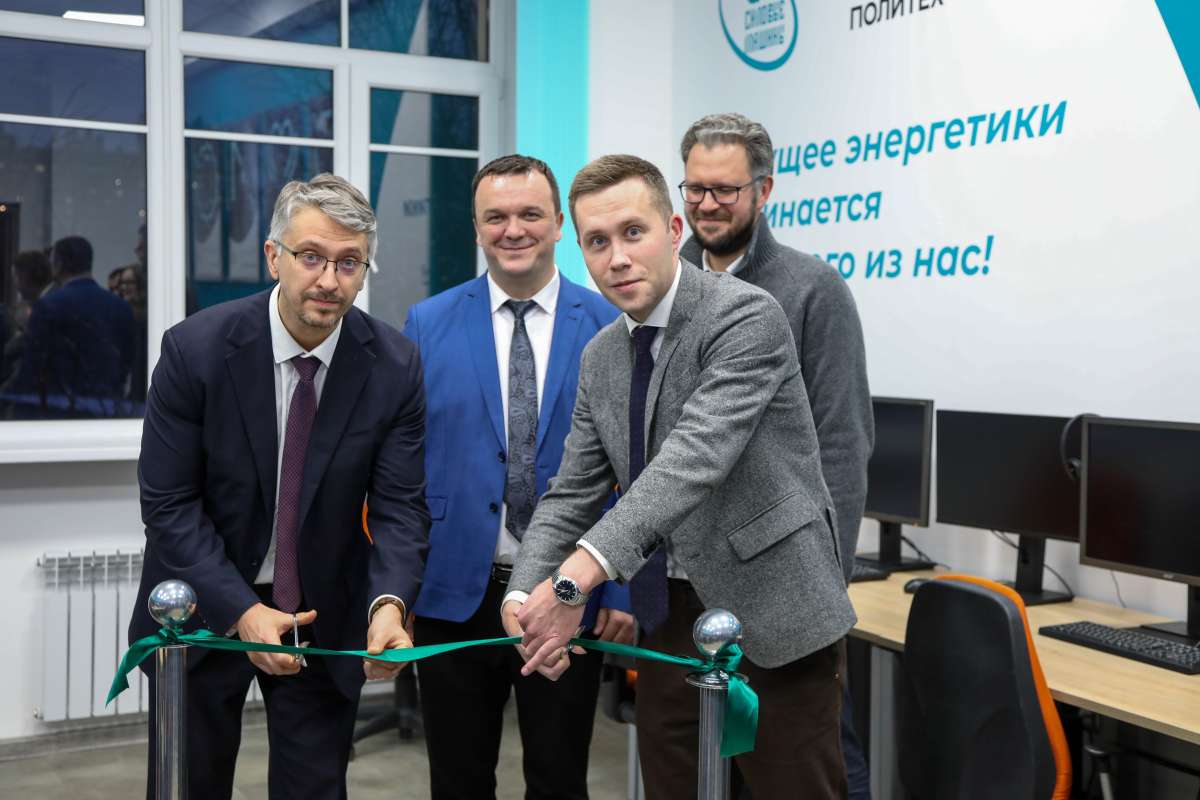

Network Collaboration: Polytech Becomes a Partner of Rosatom’s Reference Laboratory
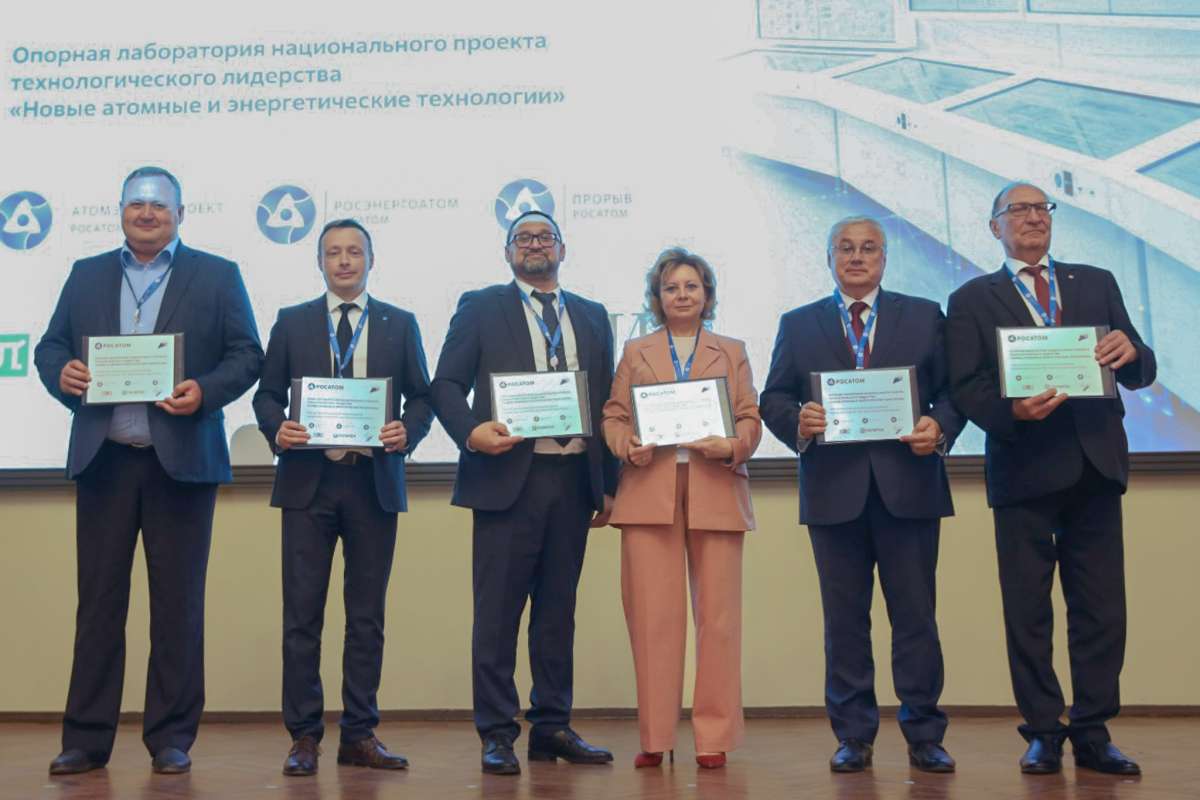
The St. Petersburg branch of JSC «Atomenergoproekt» opened a reference laboratory titled «Computational Computer Modeling of NPP Processes and Systems: Virtual Power Unit.» The ceremony was attended by representatives of Rosenergoatom Concern, JSC «Proryv» (Breakthrough), Atomenergoproekt, and three universities that train nuclear engineers: Peter the Great St. Petersburg Polytechnic University, National Research University «MPEI,» and Nizhny Novgorod State Technical University named after R. E. Alekseev. The event included a visit to the laboratory, an introduction to the operation of the Virtual Power Unit (VPU), and a session titled «Reference Laboratory of the National Project: Partnership for Technological Leadership.»
Addressing the event participants, Natalia Ilyina, Director for the Management of Scientific and Technical Programs and Projects at Rosatom State Corporation, emphasized:
"This is the second reference laboratory that Rosatom is opening under the national project 'New Nuclear and Energy Technologies.' If the first laboratory was dedicated to robotic solutions for new energy, this platform shapes the digital workflow of engineers designing facilities. Its key focus areas are calculations, computer modeling of NPP processes and systems, virtual power unit technologies, digital twins, and modern tools for the design and operation of complex energy facilities. The platform serves as a network interaction environment where the competencies of technology developers, industrial partners, and universities are brought together. It is here, on modern domestic equipment and while solving real engineering problems, that the country's future scientific and engineering leaders should be shaped. Through such cooperation, we are building the human resources foundation needed to achieve technological leadership — a national goal set by the President of Russia."
In the assembly hall, the guests were welcomed by Konstantin Ilyinsky, First Deputy General Director — Chief Engineer of the United Design Institute of JSC "Atomenergoproekt": "Cooperation with the Ministry of Science and Higher Education has been ongoing for a long time. For us, this event is an opportunity to meet, discuss current challenges, and share new ideas. The task before us and the universities is not just to train specialists, but to ensure their maximum immersion in the current activities of enterprises and their involvement in solving pressing industry issues. And this needs to be done while they are still students. The reference laboratory is designed, among other things, to address these tasks. We hope that it will give an additional impetus to the development of our relationships and the training of personnel for the nuclear energy industry."
The panel discussion featured partners of the reference laboratory. Igor Magola, Deputy Director for Technical Policy at Atomproekt — Director for Safety Justification, emphasized:
"Computational competency is the foundation of design activity. The Virtual Power Unit helps connect several levels of work: justification of design solutions, safety verification, analysis of operating modes, comparison of calculation codes, and the training of young specialists. It is important that a student or young engineer sees not an abstract problem, but the connection between calculations and design logic. For Atomenergoproekt, a dual result is important. The first is applied: we gain an environment where we can carefully develop calculation cases and reduce the cost and time of justifications through digital modeling prior to physical testing. The second is human resources: collaboration with universities provides a flow of trained calculation specialists who are already proficient in the tools used in the industry."
Sergey Gudin, Director for Human Resources and Social Policy at Rosenergoatom Concern, spoke about what kind of graduates the enterprise expects:
"For an operating organization, the key issue is the quality of training of the specialist who comes to the facility or to the operational support team. We need graduates who understand not only the calculation scheme but also the actual operating modes of NPPs, equipment limitations, cause-and-effect relationships, and safety culture. In this sense, the digital model is very useful. It does not replace the plant, but it allows for the safe analysis of operating modes, visualization of the consequences of engineering decisions, and the ability to ask questions and make mistakes in a learning environment rather than at a real facility. This reduces the adaptation gap between graduation and actual work. The Concern is ready to participate in formulating competency requirements and in evaluating training outcomes. For us, the laboratory should be not only an educational platform but also an environment where the future specialist becomes accustomed to engineering responsibility and to the connection between calculations and operational reality."
Representatives of the universities shared their vision of their contribution to the laboratory's work and their expectations from the collaboration. In particular, Lyudmila Pankova, Vice-Rector for Educational Activities at SPbPU, noted:
"For Polytechnic University, the reference laboratory is primarily an educational and methodological framework. We see our role as connecting industry tasks with educational programs, network modules, additional professional education, and the research work of students and postgraduates. Polytech's contribution is methodological assembly. A unified training framework is needed among partner universities: common learning outcomes, comparable assignments, clear assessment criteria, and methodological materials for practicums using the VPU. Without such a framework, it will be difficult to scale network collaboration."
"Network programs allow us to combine the strengths of different universities. One university may be stronger in calculation methods, another in power equipment, a third in operational logic or applied mathematics. The laboratory provides a common environment where these competencies converge around real industry tasks."
"Of particular importance are final qualification theses and dissertations. Their topics should be linked to the enterprise's challenges, rather than being formulated in isolation. This way, the student progresses from an academic assignment to an engineering problem statement, and the enterprise gains a motivated candidate familiar with the tools and design culture."
Lyudmila Pankova also emphasized the importance of faculty internships. The Vice-Rector is confident that if a lecturer understands current industry requirements, they approach course design and practicums differently. Therefore, the laboratory should serve not only as a student environment but also as a faculty environment for competency renewal.
Representatives of Atomenergoproekt, Rosenergoatom Concern, JSC "Proryv," SPbPU, NRU MPEI, and NSTU delivered reports on computer modeling, the use of the Virtual Power Unit as a modeling tool, personnel policy, and other industry issues. Following the discussion of various aspects of the reference laboratory's operation, the participants concluded that the laboratory is essential as a working mechanism where industry requirements are translated into calculation tasks, educational programs, and specialist training. Enterprises need students who understand how to solve assigned problems and how to work with the tools for solving them. And for that, experience is needed — experience that can be gained at the reference laboratory. Thus, the Virtual Power Unit should become a shared computational and educational environment where enterprise tasks enter the educational agenda, universities receive clear rules for network collaboration, and graduates leave the university as competent specialists ready for engineering work.
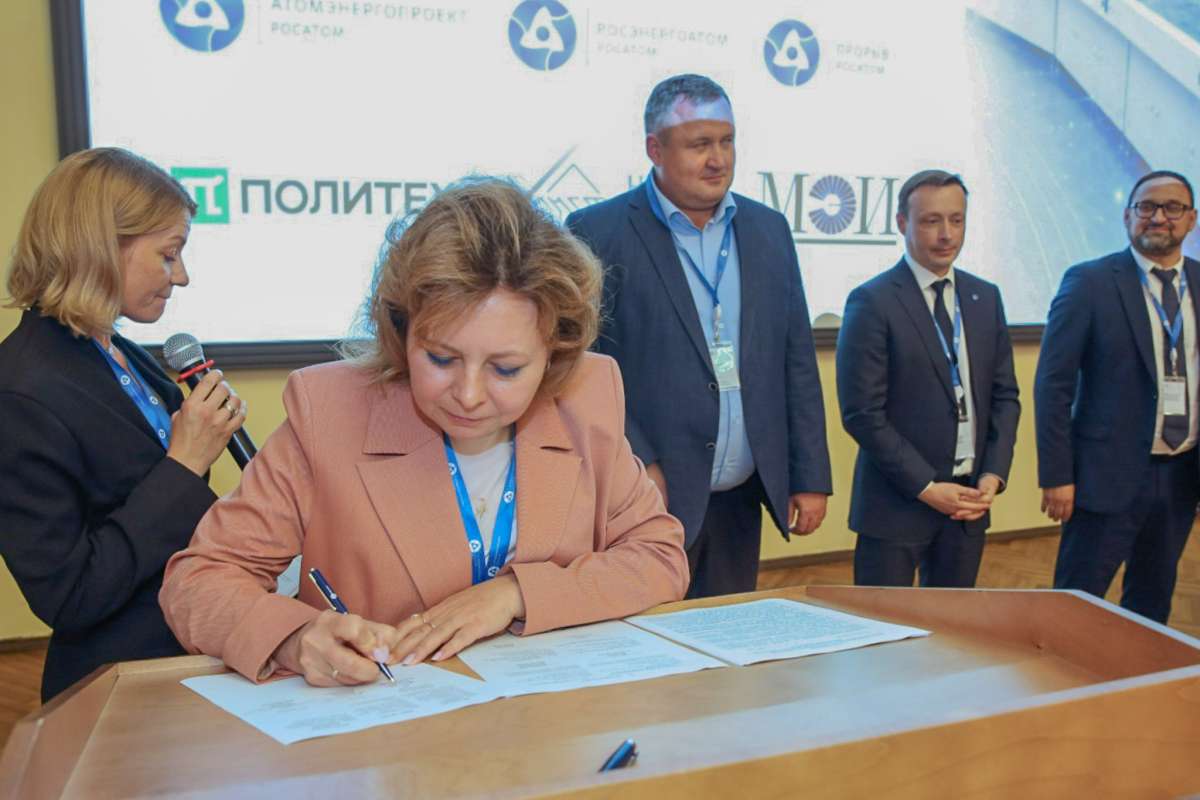
The culmination of the meeting was the ceremonial signing of a cooperation agreement by the participants of the reference laboratory "Computational Computer Modeling of NPP Processes and Systems: Virtual Power Unit."
The laboratory specializes in computational computer modeling of NPP processes and systems — one of the priority areas of the digital transformation of modern nuclear energy. Its key element is the software and hardware complex "Virtual Power Unit of an NPP": a set of software tools and calculation codes that allows modeling the operation of equipment and systems of a power unit, conducting multiphysics calculations, and analyzing various operating modes of a nuclear plant.
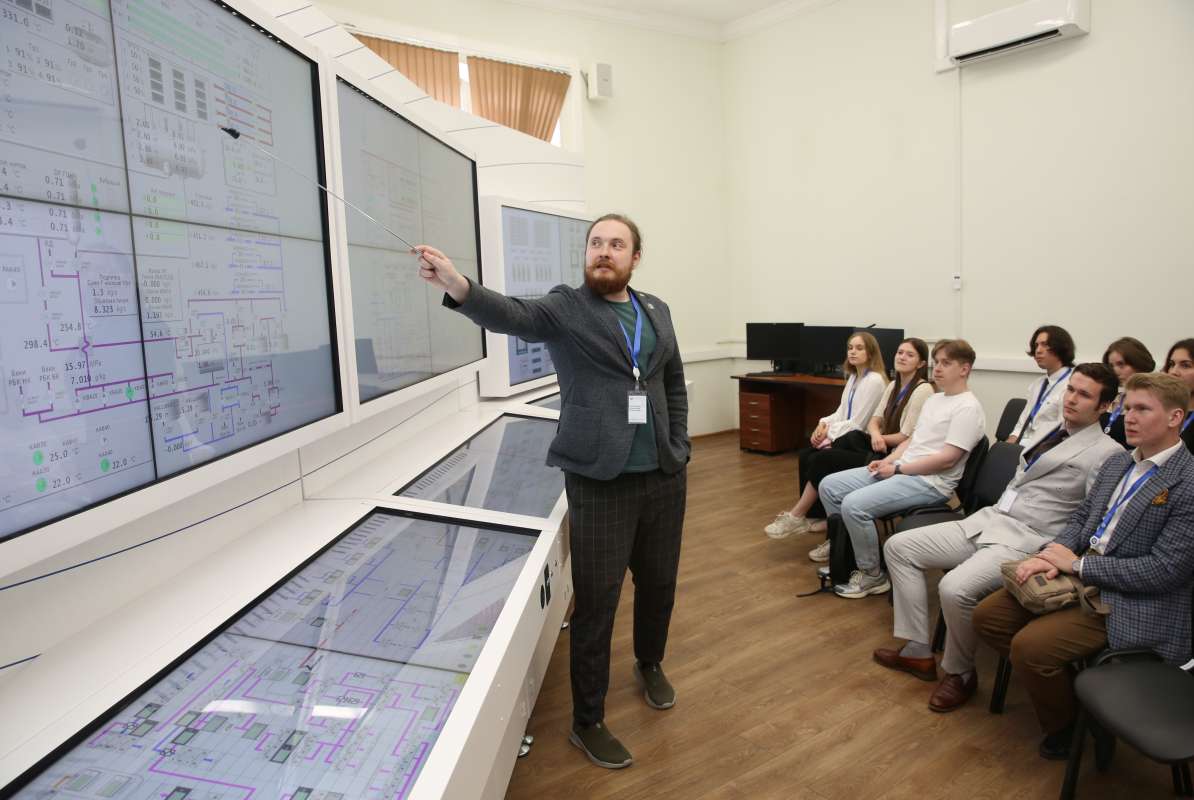
Polytechnic University will serve as the venue for the laboratory's educational and experimental base. By 2030, more than 1,000 students will undergo training there. Eight higher education programs, continuing professional education courses, faculty training, and international educational projects will be implemented.
After the ceremony, the session participants visited the reference laboratory and saw the Virtual Power Unit in action.