
From Calculation Model to the NPP Turbine Hall: Polytechnics' Practical Training in the Urals

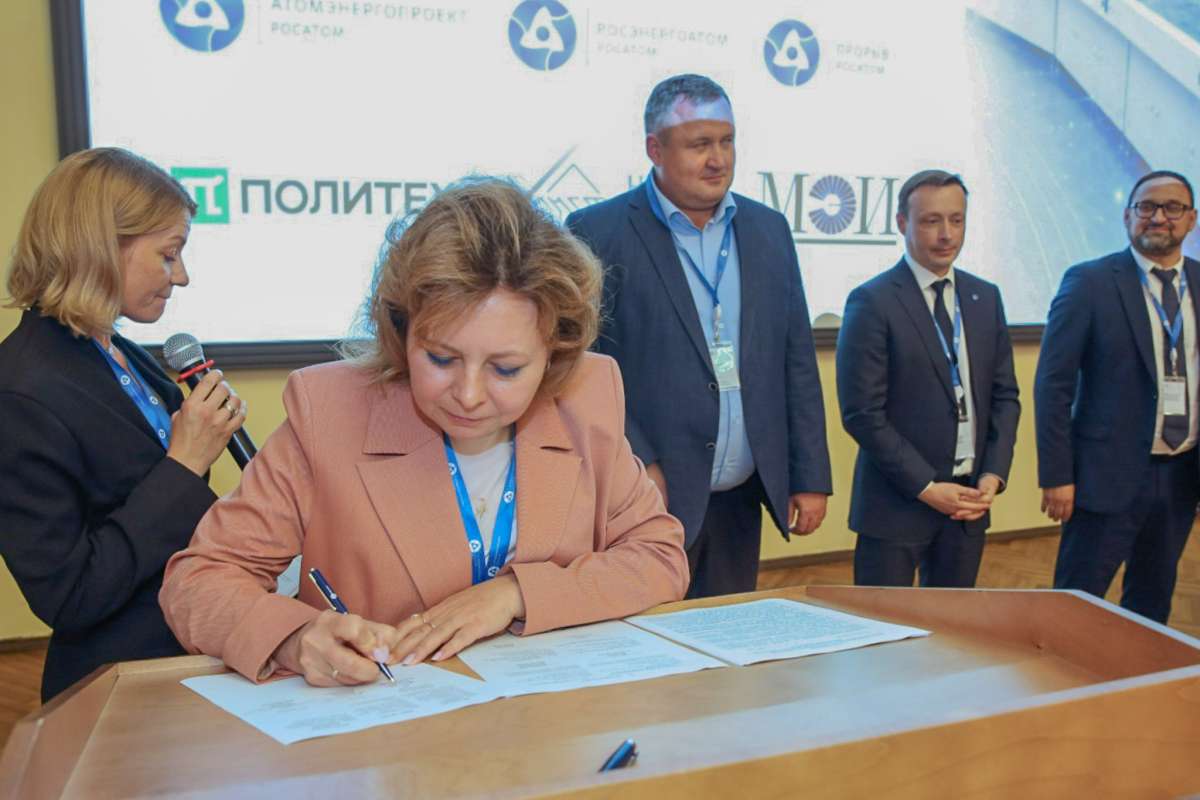
A delegation of students and lecturers from Peter the Great St. Petersburg Polytechnic University (SPbPU) took part for the first time in an introductory practical training program at leading power engineering enterprises in the Urals. The key element of the trip was the hands-on practice at the training simulator of the Beloyarsk NPP — the world's only industrial-scale power plant with fast neutron reactors. The trip was organized as part of the implementation of the Roadmap for personnel, technological, and scientific cooperation between SPbPU and JSC «Concern Rosenergoatom» for 2025−2028.
An engineer cannot be formed solely through classroom lectures and studies. At Polytechnic University, top-class specialists are taught not only fundamental theoretical disciplines but are also introduced in practice to the operations of leading industrial enterprises. For the first time in the university's history, representatives of the Institute of Energy conducted an introductory practical training program at enterprises in the Urals. The future engineers traced the entire lifecycle of power machines: they saw how they are operated, how they are manufactured, and how they are restored to service after repairs.
The culmination of the trip was a visit to the turbine hall of the Beloyarsk NPP. The plant operates two power units with BN-600 and BN-800 fast neutron nuclear reactors. This enables the production of nuclear fuel and the use of liquid sodium as a coolant. The Polytechnicians were shown the first and second power units of the plant, and the students and lecturers also visited the turbine hall and the unit control room of power unit No. 4 with the BN-800 reactor. This is, without exaggeration, a unique place: using the operating reactor, the plant's specialists work with the parameters of power unit No. 4 with the BN-800 reactor, which delivers over 800 MW to the grid (enough electricity to power a large metropolis for a day).
The most exciting part awaited the guests at the plant's training center. On a full-scale simulator, where NPP operators are trained, the students and lecturers themselves performed several control operations on the unit: they practiced disconnecting one of the three sodium loops, recompensating for excess reactivity, and then went through a scenario of a complete station blackout. Three-dimensional equipment models helped them understand the reactor design, where liquid sodium serves as the coolant.
"I am sincerely grateful to the university for the opportunity to visit the Beloyarsk NPP — Russia's only fast neutron nuclear plant. This makes it truly unique," shared Victoria Golubkova, a student in the "Nuclear Power Plants: Design, Operation, and Engineering" program.
At the Ural Turbine Plant, the Polytechnic delegation saw what they study in lectures and on test benches at the Graduate School of Power Engineering — steam turbines. The guests walked through the workshops along the entire production chain: from raw material to a fully assembled turbine at the assembly section, seeing how parts are machined and how the machine takes its final form before being shipped to the customer. Throughout its history, the plant has produced over 950 steam turbines; its equipment operates in 27 countries, and more than half of the cogeneration turbines at Russian power plants are of Ural manufacture. The Polytechnicians were shown the legendary T-100, of which over 260 have been produced, and were told about the record-breakers in the lineup: the world's most powerful cogeneration turbine at 335 MW, a turbine for waste-to-energy plants, and the power sections of turbine units for nuclear icebreakers of Project "22220" — the "Arktika," "Sibir," and "Ural."
The Polytechnicians also visited the turbine halls of Turboservis Rus, Russia's largest service company for gas turbine units. The company's engineers guided the guests through the entire part's journey: incoming inspection, diagnostics, repair, application of protective coatings, and final quality inspection. The production facility handles repairs of the hot-section components of gas turbines from leading global manufacturers.
"It is important for us to show students what the industry lives by today. When future engineers see production with their own eyes, they understand both the profession and the challenges they will have to solve much better," noted Alexey Kultyshev, President of Turboservis Rus.
For some students, this trip was their first close encounter with industrial production. "It was a very inspiring experience. When you see firsthand what the industry is all about, you want to dedicate yourself to it with even more enthusiasm," said Daniil Grinyuk, a student in the "Nuclear Energy and Thermal Physics" program.
Such field trips are not one-off excursions for Polytechnic University; they are part of a systematic effort to bridge classroom learning with hands-on industrial practice. "We are training an engineer who, by the time of graduation, already understands the language of production. That is why a plant or a power station is just as much a learning venue for us as a laboratory: a student must be able to touch with their own hands what they previously calculated on paper," noted Alena Aleshina, Director of the Graduate School of Power Engineering.