

Energy Institute Excursion Day: First-Year Students Explore the Energy Industry from the Inside
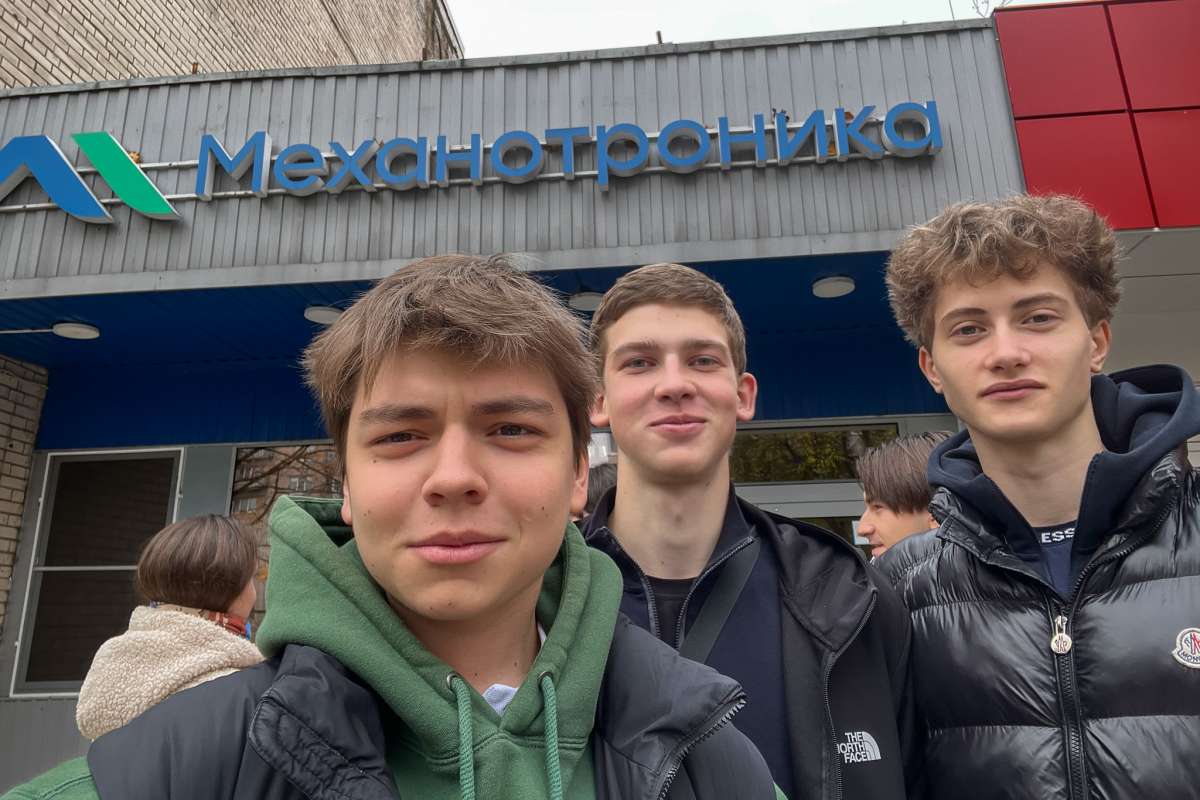
On 9 October, first-year electrical power engineering students from the Institute of Energy at Peter the Great St. Petersburg Polytechnic University (SPbPU) went on excursions to leading energy companies and facilities in St. Petersburg and the Leningrad Region. For many, it was their first opportunity to discover their future profession firsthand—not through textbooks, but in real production workshops, at electrical substations, and in laboratories.
That day, the students visited ten sites, ranging from operating power plants and electrical substations to high-tech manufacturing facilities and research centres. They saw the equipment they will one day work with, learned about current engineering challenges, and spoke with industry professionals.
Despite the early start and packed schedule, the excursions left an overwhelmingly positive impression. We received and reviewed 121 positive feedback responses! Students shared their discoveries, thanked their guides, and said they would love to take part in similar activities more often.
Here is a look at the places our first-year students visited and the experiences that made the strongest impression on them.
At Rosseti’s Intelligent Digital Grid Laboratory, the students explored modern technologies for testing electrical equipment. The highlights included the testing ground, electromagnetic compatibility laboratories, and climatic chambers used to simulate extreme operating conditions.
“The most interesting parts were the testing ground and the electromagnetic compatibility laboratory,” said Vyacheslav Astrauskas.
At K-Elektrotekhnik, the students saw how electrical panels and control cabinets are assembled and learned about equipment used for electrical installation work. Company representatives spoke about completed projects, professional development, and career opportunities.
At the Rosseti Lenenergo training centre, the future power engineers examined equipment used in overhead power lines and substations. They learned about different types of insulators, conductors, and devices designed to protect power lines from vibration. The story of how Leningrad’s power engineers kept the city supplied with electricity during the Siege of Leningrad made a particularly strong impression.
“The excursion was useful because it allowed us to see how the knowledge we are beginning to acquire in our first year is applied in practice. It helped us better understand what our future professional activities might involve and confirmed the importance of the field we have chosen to study,” noted Ekaterina Kazakova.
At the Mechatronics Scientific and Technical Centre, the students followed the entire production cycle of relay protection and automation equipment, from manufacturing electronic circuit boards to assembling finished devices and cabinets. The people they met were just as memorable as the equipment: the staff spoke enthusiastically about their work and shared their expertise with the visitors.
“I saw so many interesting and memorable things, such as the machines that manufacture circuit boards and the rooms where relay protection devices are assembled. Our guide, Dmitry Kharitonov, was very friendly. Everything was explained and demonstrated to us in detail,” wrote Sergey Bobkov.
The visit to the Volkhov-Severnaya substation, operated by the Unified National Power Grid of Russia’s North-West branch, gave students an opportunity to see how a historic energy facility continues to operate using modern technologies. They learned about high-voltage equipment and control systems, as well as the development of St. Petersburg’s power supply infrastructure.
At the substation on Ispytateley Avenue, the students saw operating high-voltage equipment, power transformers, complete switchgear units, and a relay protection hall. The scale of the facility and the opportunity to learn how it operates attracted particular interest.
At Nevsky Transformer, the first-year students explored the stages involved in manufacturing power transformers, from material processing and assembly to testing finished equipment. They were especially impressed by the sheer size of the products and the testing building, where the reliability of transformers is verified.
At the Research Institute of Electrophysical Apparatus (NIIEFA), the students learned about the institute’s history, modern electrophysical installations, and research into controlled thermonuclear fusion. They visited the museum and production facilities, saw experimental equipment, and learned about opportunities to pursue a career in research.
For some, the excursion proved to be a genuine source of professional inspiration. After visiting NIIEFA, Alexander Grigorenko admitted: “Now I want to take part in creating tokamaks.”
At Pervomayskaya Thermal Power Plant No. 14, the students discovered how a combined heat and power plant operates. They explored turbine equipment, transformers, and process control systems. The control room and the high level of production automation particularly fascinated the future engineers.
“What impressed me most was the almost complete automation of the entire process. The specialists use their minds rather than their hands,” shared Davlet Ablyazov.
At Elektrosila, part of Power Machines, the first-year students were introduced to the manufacture of large electrical machines. They visited the hydrogenerator and turbogenerator workshops, where they saw rotors, stators, and metalworking machines. Seeing the equipment in an actual production environment helped them better appreciate the scale and complexity of engineering challenges.
“I was really impressed by the size of the machines, as well as the machine tools used to process their components,” said Ignatiy Mokryansky.
The Excursion Day demonstrated just how diverse the modern energy industry is. The students observed real production processes and gained a clearer picture of their potential professional futures.
The Institute of Energy would like to thank all the companies and their employees for their warm welcome, engaging tours, and willingness to share their experience with the next generation of power engineers!

